
Dog Jealousy: Myth or Reality?
Have you ever noticed your dog vying for your attention whenever you pet another dog? This common behavior amongst our furry friends often stirs the debate: Is dog jealousy real or just a figment of our anthropomorphic imagination? Interestingly, some experts argue that dogs may exhibit emotions akin to jealousy when they feel their bond with you is threatened.
Historically, this concept of dog jealousy can be traced back to early animal behavior studies. Modern research, including a 2014 study published in PLOS ONE, suggests dogs display jealous behaviors such as snapping or pushing when their owners interacted with a fake dog. It’s fascinating to consider that their reactions might be rooted in a primal instinct to protect essential social bonds.
Dog jealousy is considered a reality by many experts. Studies have shown that dogs exhibit jealousy-like behaviors such as pushing between their owners and other objects or animals, especially when attention is divided. These actions suggest that dogs may feel possessive and protective, resembling human emotions of jealousy closely.
Dog Jealousy: Exploring the Science Behind It
Scientists have long debated whether dogs experience jealousy. Recent studies suggest that dogs may indeed show signs of envy, particularly when their owners give attention to other dogs. In a 2014 study, dogs exhibited behaviors like pushing or snapping at a stuffed dog that received affection. This reaction could indicate that dogs feel a threat to their bond with their owners. These findings are fascinating and open the door to further research.
One of the most compelling pieces of evidence comes from behavioral observations. Researchers have noticed that dogs display jealous-like reactions similar to those seen in young children. For instance, when a dog sees its owner interact with another pet, it might try to insert itself between them or seek extra attention. These behaviors mirror the typical human response to jealousy. The similarity can make dog owners feel even more connected to their pets. 
Additionally, understanding dog jealousy can be quite illuminating. Dogs are known for their strong attachment to their human companions. Their tendency to show jealousy likely stems from this deep bond. By studying these emotional responses, researchers can learn more about dog behavior and cognition. Furthermore, it adds depth to our understanding of the human-animal relationship.
Critics argue that labeling dog behavior as jealousy is anthropomorphism, attributing human emotions to animals. However, studies on animal behavior, including dogs, show that these pets have complex emotional lives. As science progresses, more insights are likely to emerge. For now, the evidence points to dogs having the capacity for feelings akin to jealousy. It’s an exciting area of study for both dog lovers and scientists alike.
What Recent Studies Say About Dog Emotions
Recent studies have shed light on the emotional lives of dogs. One study published in the journal Science showed that dogs release oxytocin, the “love hormone,” when they interact with their owners. This hormone is also present in humans, suggesting a similar experience of bonding and affection. Researchers are excited about these findings, which suggest dogs have complex emotional capabilities. It strengthens the bond we share with our furry friends.
Another intriguing study focused on dogs’ reactions to the emotions of their human companions. Researchers discovered that dogs can differentiate between their owner’s happy and sad facial expressions. This indicates a level of empathy and emotional understanding. Dogs were more likely to approach and nuzzle their owners when they appeared sad. Such behaviors demonstrate that dogs are attentive and responsive to human emotions.
Further research has delved into how dogs respond to jealousy. A popular experiment involved dog owners interacting with a realistic-looking stuffed animal dog. Many real dogs displayed signs of aggression or attention-seeking behaviors when their owners petted the fake dog. This suggests that dogs can experience feelings similar to human jealousy. These findings continue to generate interest and debate.
Scientists also study dogs’ emotional responses through their vocalizations. According to research, dogs have distinct barks and whines that correspond to different emotions. For instance, a whine might indicate anxiety or distress. Researchers are working on developing methods to decode these sounds accurately. This could help veterinarians and pet owners better understand and respond to their dogs’ emotional needs.
Recognizing Jealous Behaviors in Dogs
Dogs often show jealousy when they see their owners giving attention to other pets or people. One common sign is the dog trying to push its way between you and the source of its jealousy. Some dogs might also bark excessively or whine. These vocalizations are their way of demanding attention. It’s their version of saying, “Look at me!”
Another behavior to watch for is aggressive actions. Your dog might growl or snap at the object of your affection. This aggression is a clear signal that your dog feels threatened. Importantly, such behavior is more common in dogs that are naturally more territorial. Dogs with a strong pack mentality are especially prone to these displays.
Dogs may also become clingy. If you notice your dog sticking to you like glue whenever you’re around another animal, this could be a sign of jealousy. They might follow you from room to room, refusing to leave your side. This behavior indicates their insecurity and desire to maintain their bond with you. It’s a plea for reassurance.
Changes in eating habits can be another indicator. A dog that suddenly loses interest in food might be showing jealousy. On the flip side, some dogs might eat more when they feel neglected. It’s essential to observe any sudden changes in your dog’s routine. Such shifts can signal emotional distress, including jealousy.
Comparison with Other Animals
Jealous behaviors are not exclusive to dogs; other animals exhibit them too. For example, studies on primates like chimpanzees show they can feel jealousy. When a favorite peer receives more attention, a chimpanzee might display aggression or sulk. This behavior highlights the emotional complexity of our closest animal relatives.
Birds, especially parrots, have also shown jealous tendencies. Parrots may become destructive or noisy when their owners interact with other pets or family members. These actions are their way of demanding attention. Parrots bond closely with their human companions, similar to dogs. It’s their unique way of expressing jealousy.
Cats are known for their independent nature, but they can get jealous too. A cat might hiss or swat at a new pet or even a baby in the house. They may also start marking their territory more frequently. This behavior is a response to changes in their environment. Cats like routine, and any disruption can trigger jealousy. 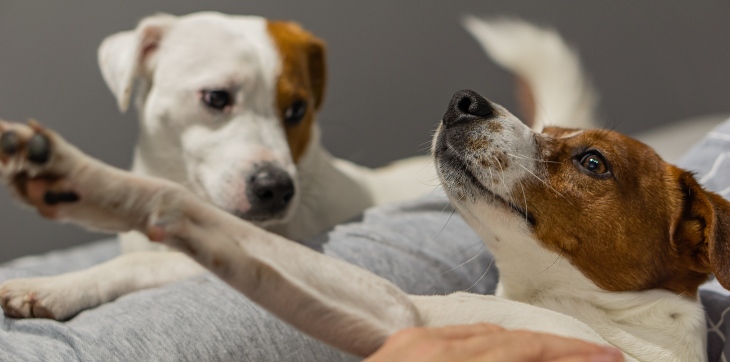
Horses, another intelligent species, show jealousy in herding environments. A horse might nip or push other horses away from their preferred human or fellow horse. This behavior is often observed in domesticated horses that form strong bonds with their handlers. Horses, much like other animals, have social ranks and close relationships.
Interestingly, even animals like fish can exhibit jealous-like behaviors. Certain species of fish become territorial and aggressive when they see their owners paying attention to other fish. They might chase or nip at tank mates. Fish demonstrating jealousy is a fascinating area of study that showcases the diversity of emotional responses in animals.
Evidence Supporting the Reality of Dog Jealousy
Several studies provide evidence that dogs can experience jealousy. A notable study from the University of California, San Diego observed dogs reacting to their owners interacting with a realistic-looking stuffed dog. Many dogs exhibited jealousy-like behaviors, such as snapping and pushing at the fake dog. These behaviors indicate a protective or possessive response. It suggests that dogs do experience a form of jealousy.
Another piece of evidence comes from brain imaging studies. Researchers have found that the brain areas activated in dogs when they see their owners with other dogs resemble the areas activated in human brains during feelings of jealousy. This discovery adds a scientific layer to our understanding. It shows that there’s a biological basis for these emotions in dogs. This finding is groundbreaking and offers fresh insights.
Behavioral tests also support the idea of dog jealousy. When owners gave attention to lifelike dog dolls, real dogs showed distress and tried to intervene. Such actions are similar to human jealous reactions. By observing these behaviors, scientists can better understand canine emotions. This can help pet owners manage their pets’ emotional well-being.
A 2014 study published in PLOS ONE found that dogs displayed significantly more jealous behaviors when their owners ignored them in favor of a fake dog. The dogs tried to get between their owners and the fake dog, showing clear signs of jealousy. This study provided strong empirical evidence of dog jealousy. It has influenced how we view canine emotional health.
Interestingly, real-world anecdotes also support the science. Many dog owners share stories about their pets acting out when another animal or person gets too much attention. These personal experiences align with scientific findings, bridging the gap between data and everyday life. It underscores the reality of these emotions in our furry friends.
Arguments Against Dog Jealousy Being Real
Some experts argue that interpreting dogs’ behaviors as jealousy is a form of anthropomorphism. Anthropomorphism means attributing human emotions and characteristics to animals. Critics believe that what we see as jealousy might merely be basic territorial or protective instincts. They say these reactions are not rooted in complex emotions. This perspective challenges the idea that dogs feel jealousy as humans do.
Behaviorists often suggest that dogs’ reactions are more about competition for resources than true jealousy. When a dog pushes between you and another dog, it might be trying to secure its place and resources. Food, attention, and toys are valuable to dogs. Their actions could merely be a means to protect these resources. This behavior is driven by survival instincts, not necessarily jealousy.
Another argument against the idea of dog jealousy is the lack of self-awareness in dogs. For jealousy to exist, an individual must recognize themselves as distinct from others. Research shows that most animals, including dogs, don’t possess this level of self-recognition. Therefore, their seemingly jealous behaviors might instead be automatic responses. This viewpoint highlights the difference between instinctual and emotional behavior.
Additionally, critics point out that dogs’ jealous-like behaviors can be explained by reinforcement learning. If a dog learns that certain behaviors get them attention, they’ll repeat those actions. When a dog sees its owner giving attention to another pet and then intervenes, it’s doing what has worked before. This isn’t necessarily an emotional response but rather learned behavior. Training and experience play significant roles in shaping a dog’s actions.
Some researchers also believe that it’s human bias that leads us to interpret dog behavior as jealousy. People often project their emotions onto their pets. This projection can lead to misunderstandings about the true nature of dogs’ actions. By assuming dogs feel jealousy, we might overlook other valid explanations. Studying animal behavior requires eliminating human bias to understand them better.
Frequently Asked Questions
Dog jealousy is a fascinating topic that many pet owners and experts are curious about. Here are some common questions and detailed answers to help you understand this behavior better.
1. How do dogs show jealousy?
Dogs often display jealousy by trying to insert themselves between their owners and the object of their jealousy. They might also become more vocal, barking or whining more than usual to get attention. Additionally, some dogs may become clingier, following their owners everywhere, or displaying aggressive behaviors like growling or snapping at the other pet or person.
These behaviors are their way of saying they want your attention and love. It’s important to recognize these signs and address them appropriately. Ignoring these behaviors or not addressing them can sometimes make the jealousy worse. Providing equal attention and reassurance can help alleviate these feelings in your pet.
2. Can jealousy in dogs lead to aggression?
Yes, jealousy in dogs can sometimes lead to aggressive behaviors. A jealous dog might growl, snap, or even bite when it feels its bond with its owner is threatened. This type of aggression is usually directed towards the perceived source of jealousy, such as another pet or even a person.
Understanding the root cause of this aggression can help in managing it. Training and behavioral modification techniques, such as positive reinforcement and creating a calm environment, can be effective. Consulting a professional dog trainer or a vet behaviorist may also be necessary for severe cases.
3. Do all dogs experience jealousy?
Not all dogs experience jealousy in the same way. The tendency to display jealousy-like behaviors can depend on a dog’s breed, personality, and past experiences. Some dogs are naturally more possessive and protective, making them more prone to jealousy.
However, even dogs that seem less likely to get jealous might show signs under certain circumstances. Changes in the household, such as the introduction of a new pet or family member, can trigger these feelings. Observing your dog’s behavior and providing reassurance can help mitigate jealousy.
4. How can you prevent jealousy in dogs?
Preventing jealousy in dogs involves making sure they feel secure and loved. Spend quality time with your dog and ensure they get enough attention and affection. If you have multiple pets, distribute your time and love equally among them.
Training can also play a significant role in preventing jealousy. Teaching your dog to be comfortable with others receiving attention can reduce jealous behaviors. Rewarding calm behavior and gradually increasing the presence of the jealousy trigger can help. Consistency and patience are key.
5. Does neutering or spaying affect a dog’s jealousy?
Neutering or spaying can sometimes reduce jealousy-related behaviors, especially if they are linked to hormonal influences. These procedures can lower a dog’s tendency to be territorial and possessive, which may decrease jealousy. Additionally, neutering and spaying have many other health and behavioral benefits.
However, it’s not a guaranteed solution for all jealousy issues. Each dog is unique, and other factors such as training, environment, and socialization also play crucial roles. It’s always a good idea to consult with a veterinarian to discuss the best approach for your individual dog.
Wrapping Up the Dog Jealousy Debate
Understanding dog jealousy helps you better care for your furry friend. Recognizing the signs and knowing the underlying causes can improve your pet’s well-being. Addressing jealousy with patience and the right strategies ensures a happier household.
Whether you see it as a myth or reality, dog jealousy is an important topic. It’s clear that dogs have complex emotions. By paying attention to their needs, you strengthen the bond you share.